
Airflow was the real issue
Our panel-front Sub-Zero ran long and warmed up. He found restricted ventilation behind the built-in and a dusty condenser, not a failing compressor, and cleared it up.
Jonathan P. — Five CanyonsCabinet hub / airflow
4.9/5700+ reviews across platformsA tight Castro Valley cabinet can make a Sub-Zero run warm even when major parts are still working; airflow and condenser access should be checked before sealed-system assumptions. The first evidence is a wide cabinet photo, model and serial number, current temperatures and a lower grille or toe-kick photo that shows whether the built-in can breathe.

Direct answer
A built-in Sub-Zero sits flush with no air gap required behind it, because it breathes through the front. The condenser draws air in and exhausts heat at the lower grille and kickplate, so that opening must stay clear. In Castro Valley homes, blocked grille airflow, not a missing wall gap, is the usual cause.
Customer reviews
Review signal from the wider appliance repair service network: 700+ customer reviews across platforms with a 4.9 average rating. Visible themes emphasize accurate Sub-Zero diagnosis, same-day routing when route capacity allows, careful cabinet protection and factory-authorized Sub-Zero OEM parts when replacement parts are needed.
Our panel-front Sub-Zero ran long and warmed up. He found restricted ventilation behind the built-in and a dusty condenser, not a failing compressor, and cleared it up.
Jonathan P. — Five CanyonsNarrow reveals on our built-in made access tricky. He planned clearance, protected the floor, and serviced the condenser and fan without disturbing the integrated panels.
Mei L. — Palomares HillsHillside dust had packed the condenser on our Sub-Zero in months. He cleaned it the right way, verified run time dropped, and noted a realistic maintenance interval for our home.
Derek S. — ColumbiaWhat this means
A Sub-Zero built-in rejects heat through a controlled airflow path. If the condenser area is packed with dust, the fan is weak, the grille is blocked or later cabinetry changed the opening, temperatures can rise and alarms can appear even when the sealed system is not the first failure. That is why cabinet airflow belongs next to not-cooling, cost and model-number content.
Castro Valley Sub-Zero repair starts with the local installation as well as the appliance. Five Canyons and Palomares Hills homes may have newer integrated panels and heavy doors. Green Ridge and Columbia homes may have older openings with remodel history. The first test is to connect the cabinet sign to measured airflow, temperature and condenser evidence.
Cabinet risks
Each cabinet sign is paired with the airflow risk, the technician test and the photo that proves it.
| Cabinet sign | Airflow risk | Technician test | Photo proof |
|---|---|---|---|
| Tight lower grille or toe-kick | Condenser intake/rejection restricted | Inspect coil, fan and airflow path | Lower grille photo plus temperatures |
| Panel-ready door out of plane | Door may leak warm air and add load | Reveal, gasket and hinge check | Full door and side reveal photo |
| Recent flooring or trim work | Unit may be trapped or airflow changed | Pull/reseat safety and clearance review | Floor threshold and trim photo |
| Warm cabinet after remodel | Ventilation path may be blocked | Condenser temperature and clearance check | Wide cabinet and remodel detail |
| Dust-heavy grille | Heat stress and long run time | Coil condition and fan operation | Grille close-up without removing covers |
Planning ranges and diagnostic paths are not final quotes; final scope depends on model and serial number, cabinet access, part availability and measured evidence.
Boundary table
Owner-safe does not mean appliance disassembly.
| Task | Owner-safe? | When service is needed | Evidence |
|---|---|---|---|
| Visible grille dust | Yes, if easy and safe | Dust is behind covers or temperatures drift | Before/after grille photo |
| Condenser coil cleaning | No if covers or wiring are involved | Long run times or packed condenser | Grille, model tag and temperatures |
| Built-in pull | No | Access, leak, fan or sealed-system diagnostics require it | Wide floor/cabinet photo |
| Gasket wipe-down | Yes | Torn, stiff or uneven contact | Frost line and full door photo |
| Airflow measurement | No | Warm compartments or repeated alarms | Display readings and cabinet photo |
Planning ranges and diagnostic paths are not final quotes; final scope depends on model and serial number, cabinet access, part availability and measured evidence.
Modification table
Modification is a discussion after evidence, not a first assumption.
| Finding | What it may mean | Who decides | Before any change |
|---|---|---|---|
| Trim blocks safe movement | Repair may be diagnostic-only until access is corrected | Owner, cabinet pro and technician | Document trim and floor risk |
| Vent path blocked by remodel | Appliance cannot reject heat properly | Owner and cabinet pro | Confirm temperatures and airflow first |
| Water line has no slack | Ice maker or valve repair may need access planning | Owner and technician | Locate shutoff and leak risk |
| Floor threshold traps unit | Pulling can damage floor or panel | Owner and cabinet pro | Photograph threshold and discuss protection |
| Repeated airflow failure | Cabinet design may need correction | Owner after diagnostic report | Get written findings, not a verbal guess |
Planning ranges and diagnostic paths are not final quotes; final scope depends on model and serial number, cabinet access, part availability and measured evidence.
Proof photos
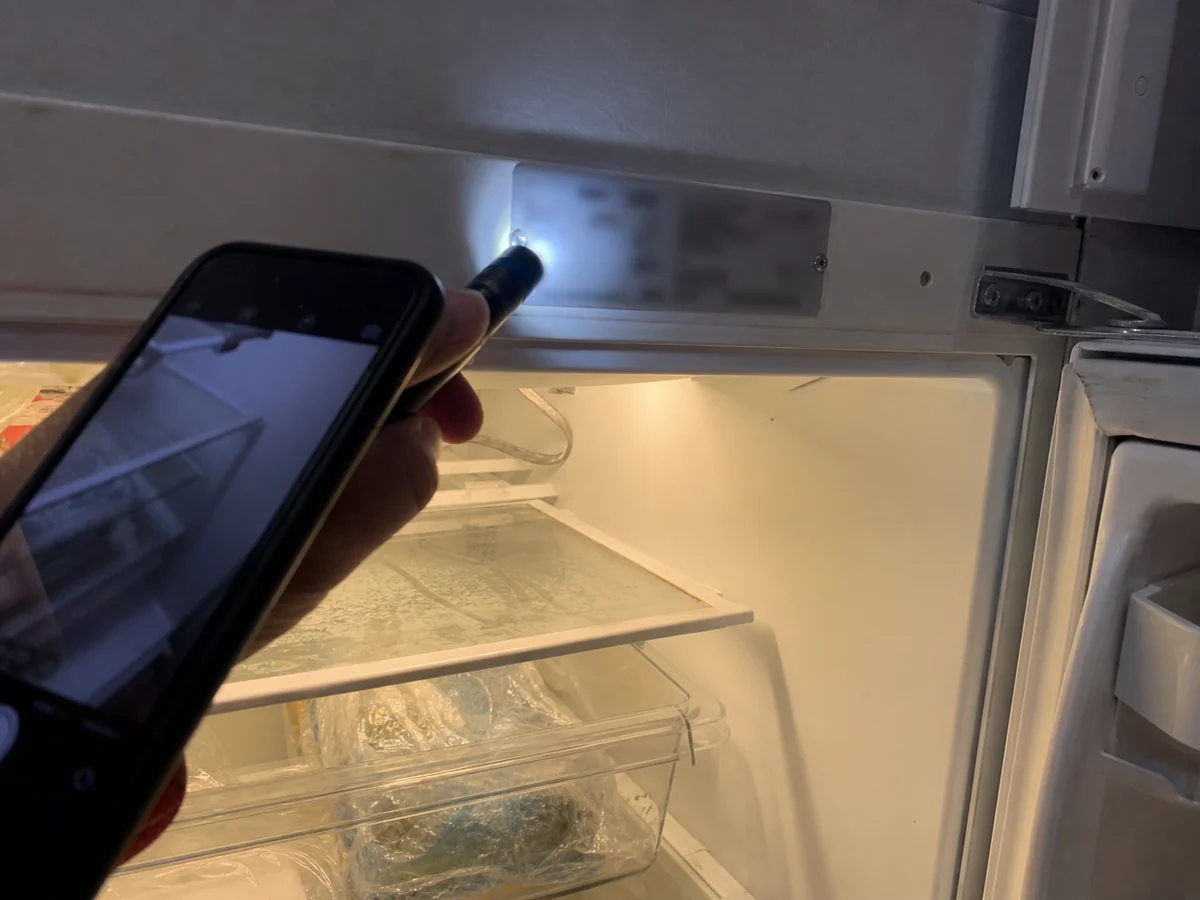
Real photos of cabinet access, condenser condition and model verification during an airflow diagnosis.


Price and time
The price changes when a cabinet airflow concern is a visible maintenance issue, a fan repair, a panel alignment problem or a true cabinet modification conversation. A cleaning or fan verification may fit inside a normal diagnostic path. A trapped built-in, water-line access problem or blocked ventilation path may require a second visit or a cabinet professional. When the unit does have to come out of its opening, the cabinet-safe built-in service approach — floor protection, panel handling and a documented reseat — has its own page on this board.
If requested through the live contact channel, useful context includes model and serial number, lower grille, full cabinet, side reveals, floor threshold and temperatures. That evidence keeps the airflow diagnosis tied to your exact built-in installation.
Related guidance
Sub-Zero repair in Castro Valley should check the cabinet and condenser path before expensive assumptions. Sub-Zero not cooling in Castro Valley can be caused or amplified by restricted airflow, dust, fan failure, door leakage or cabinet changes after remodeling.
Sub-Zero repair cost in Castro Valley changes when access, floor protection, trim or airflow correction adds labor. A built-in Sub-Zero refrigerator should be matched by model and serial number before parts are ordered. The full scope of built-in Sub-Zero repair work we take on across Castro Valley — refrigerators, freezer columns, ice makers and wine units — is laid out on the main service page.
How-to
What a homeowner can safely inspect before booking a diagnostic visit.
Only the visible lower grille or toe-kick area is inspected; do not remove covers.
Note any packed dust, pet hair or oak debris, which is common on 94552 hillside homes.
Vacuum or brush the grille surface; never bend condenser fins or open electrical covers.
If the cabinet stays warm after clearing visible dust, book a diagnostic visit instead of repeated cleaning.
Cost table
Planning ranges from a simple grille clean to cabinet coordination; airflow is measured before blaming the compressor.
| Service / symptom | What's included | Castro Valley price range | Typical time |
|---|---|---|---|
| Owner-safe grille clean | Visible grille dust removal and temperature check | $0 DIY / $160–$320 service | 30–90 min |
| Condenser coil service | Behind-cover deep clean and fan check | $220–$420 | 1–2 hrs |
| Evaporator / condenser fan | Serial-matched fan and airflow verification | $260–$560 | 1–3 hrs |
| Cabinet airflow correction | Coordinate trim or vent clearance fix | $300–$900 + cabinet pro | varies |
After a remodel or new flooring a trapped unit can run warm, so airflow is measured before any sealed-system conclusion.
Quick facts
Self-contained Castro Valley facts with explicit prices, temperatures and intervals.
Before dispatch
Use the phone link or online booking page before assuming a sealed-system failure.
Cabinet airflow FAQ
Answers focus on tight cabinets, condenser access and owner-safe boundaries.
Yes. A tight cabinet can restrict condenser airflow and create long run times, warm compartments or alarms that resemble deeper failure. The technician should check condenser condition, fan operation and clearance before sealed-system assumptions. A wide cabinet and lower grille photo help plan that test.
Photograph the full appliance, toe-kick or lower grille, side reveals, floor threshold and any trim that looks tight. Add the model tag and temperatures. These images show whether airflow, floor protection or pull/reseat limits may affect the first diagnostic visit.
You can inspect and clean only owner-accessible surfaces such as visible grille dust if it is safe. Do not remove electrical covers, force a built-in out or bend condenser fins. If temperatures are drifting, schedule a diagnostic visit rather than treating cleaning as proof.
Cabinet modification may be discussed when trim traps the unit, ventilation is blocked by later remodeling, flooring prevents safe movement or clearances no longer match the appliance needs. That decision should follow measured airflow and access findings, not a phone-only assumption.
No. Newer Five Canyons or Palomares Hills kitchens can look clean while leaving tight reveals, panel weight or toe-kick restrictions. Good design helps, but service still needs temperatures, condenser airflow and cabinet-access evidence before naming a repair.
They overlap but are not identical. Cabinet-safe service protects floors, panels and trim during access. Cabinet airflow focuses on whether the installation lets the Sub-Zero reject heat properly. A built-in Sub-Zero refrigerator may need both conversations.