
Wine column stabilized
Our Sub-Zero wine zone was drifting a few degrees, which matters with a real collection. He logged each zone, checked the sensor and condenser, and found the actual cause rather than guessing.
Charlotte W. — Palomares HillsSpecialty guide / wine columns
4.9/5700+ reviews across platformsWhen a Sub-Zero wine column in Castro Valley drifts several degrees, the concern is not only comfort cooling. Bottles, zones, sensors, fan behavior, condenser airflow and door contact all affect stability. A Palomares Hills collector cabinet or Green Ridge built-in may need a different access plan from a standard refrigerator. Use the phone link or online booking page if drift continues.

Direct answer
Castro Valley Sub-Zero Appliance Repair keeps Sub-Zero wine zones near 41-54F for whites and 54-64F for reds; when a Jensen Road cabinet in 94546 Castro Valley drifts past about 3F of set-point, the zone sensor is checked first, then evaporator-fan airflow, then the sealed system across both logged zones. Protecting a collection? Dial (510) 390-9712 now.
Customer reviews
Review signal from the wider appliance repair service network: 700+ customer reviews across platforms with a 4.9 average rating. Visible themes emphasize accurate Sub-Zero diagnosis, same-day routing when route capacity allows, careful cabinet protection and factory-authorized Sub-Zero OEM parts when replacement parts are needed.
Our Sub-Zero wine zone was drifting a few degrees, which matters with a real collection. He logged each zone, checked the sensor and condenser, and found the actual cause rather than guessing.
Charlotte W. — Palomares HillsHe took upper and lower zone temperatures, confirmed the evaporator evidence, and explained why a few degrees of drift pointed to a sensor and airflow issue, not a full failure.
Nathan E. — Briar RidgeHe made sure we had a stable backup plan before moving anything and worked cleanly around the built-in unit. Genuine Sub-Zero sensor, written findings, steady temperatures since.
Sophia C. — ColumbiaMedia proof
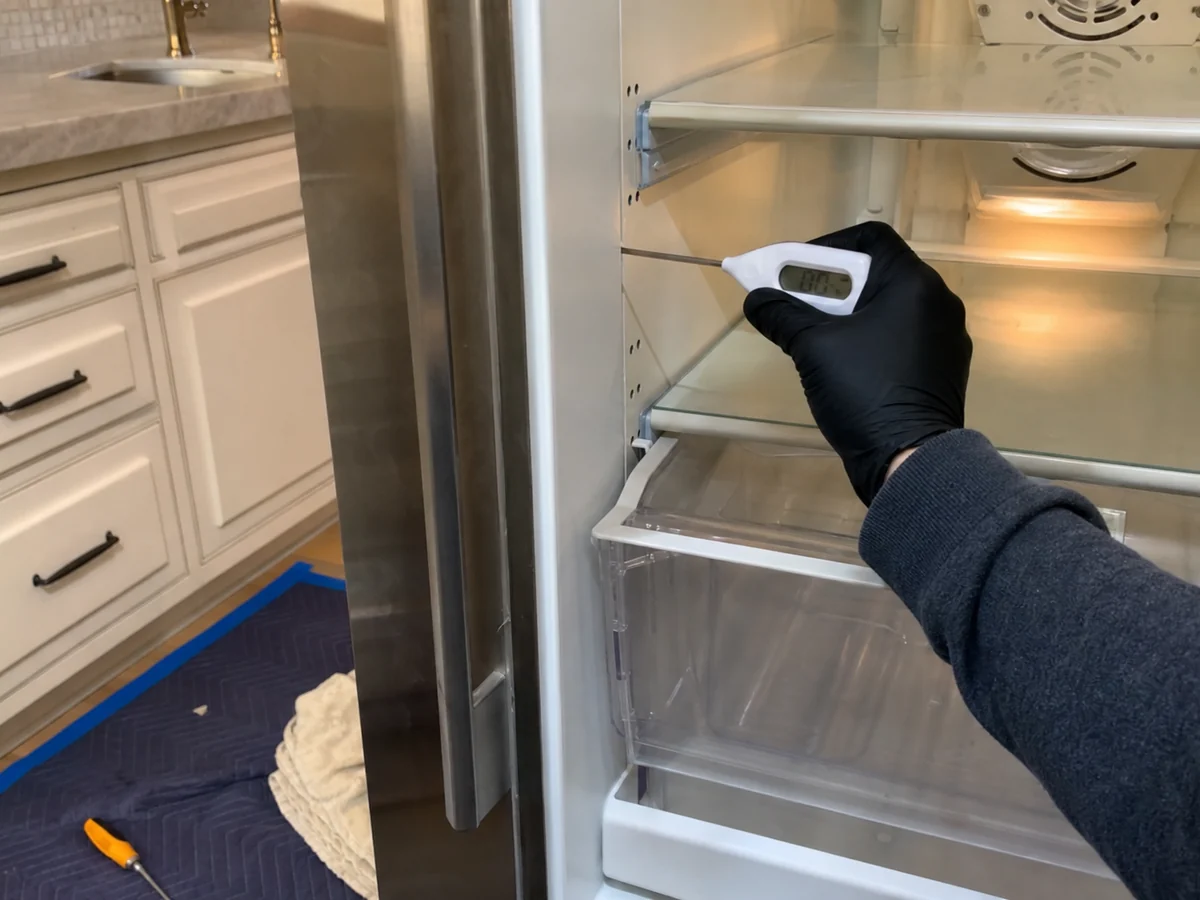
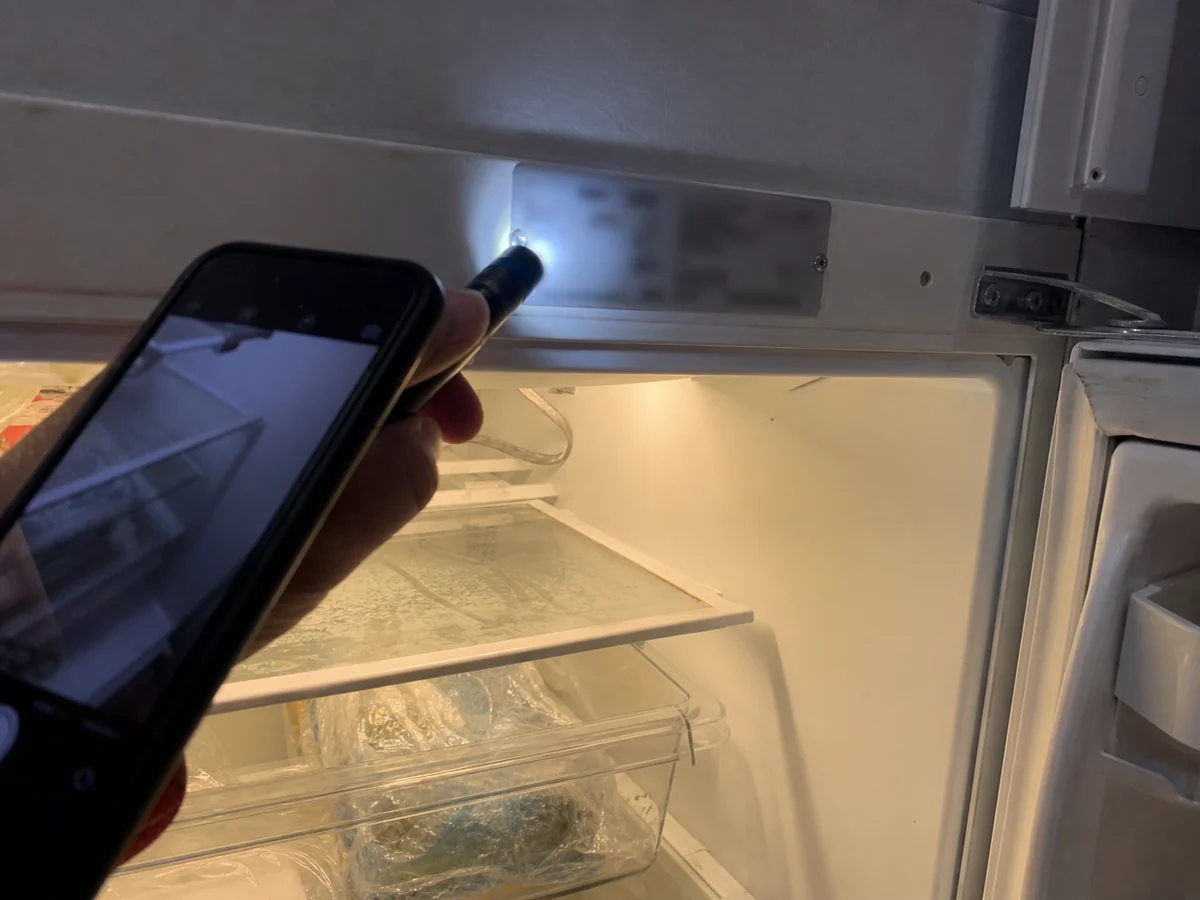
Wine-column service is judged by zone stability, so the proof is zone readings and probe verification, not a generic refrigerator photo.

Specialized context
A Sub-Zero wine column is judged by stability, zone separation and gentle airflow. A fresh-food refrigerator can tolerate a wider user experience before anyone notices. A collector cabinet cannot. That is why the first request is not just whether the unit is cold; it is how the upper and lower zones behave over time.
In Five Canyons and Palomares Hills, wine columns are often built into tall, finished cabinet walls. Pulling the unit, checking airflow or replacing a fan requires more cabinet awareness than a freestanding appliance. In Columbia or Green Ridge, older cabinetry and remodel history may influence ventilation and service access.
Issue cards
Each issue changes the quote differently.
| Issue | Symptoms | Diagnosis | Parts / quote factor |
|---|---|---|---|
| Sensor drift | One zone reads wrong or cycles oddly | Compare display to probe and model literature | Sensor availability and access |
| Evaporator fan weakness | Uneven zone temperature | Fan operation and airflow check | Fan match by serial |
| Condenser restriction | Both zones trend warm | Coil and condenser fan check | Cleaning or fan repair |
| Door seal/contact | Condensation or warm edge | Gasket and reveal check | Gasket plus alignment |
| Control issue | Erratic display or alarms | Input/output testing | Board verification before ordering |
Planning ranges and diagnostic paths are not final quotes; final scope depends on model and serial number, cabinet access, part availability and measured evidence.
Decision section
Wine storage decisions depend on the collection and actual readings.
Local proof
Five Canyons homes often have newer integrated cabinets with clean reveal lines but tighter service access. Palomares Hills can add hillside route timing and larger kitchen walls where built-ins are grouped. Green Ridge and Columbia homes may have older cabinets where airflow paths changed during remodels.
Those local details are only useful when tied to a service decision. They tell the technician to ask for cabinet photos, protect floor surfaces and verify airflow before assuming the sealed system is failing.
Cost table
Planning ranges for wine-zone work; zone readings decide sensor versus fan versus airflow before parts.
| Service / symptom | What's included | Castro Valley price range | Typical time |
|---|---|---|---|
| Zone diagnosis | Upper/lower probe logging and sensor comparison | $149–$235 | 1–2 hrs |
| Sensor / thermistor | Model-matched sensor and calibration check | $190–$430 | 1–2 hrs |
| Evaporator fan | Serial-matched fan and zone airflow verification | $260–$560 | 1–3 hrs |
| Condenser cleaning | Coil clean, fan check, stability verification | $160–$320 | 1–2 hrs |
| Control board | Service-mode testing and model-matched board | $320–$980 | 1–4 hrs |
A few degrees matters for a collection, so zone readings separate a sensor fault from real cooling loss before any part is ordered.
Quick facts
Self-contained Castro Valley facts with explicit prices, temperatures and intervals.
Before dispatch
Use the phone link or online booking page when a wine column cannot hold stable zone temperatures.
Wine FAQ
Focused on temperature stability and collector decisions.
Most Sub-Zero wine zones run about 41–54°F for whites and 54–64°F for reds. For a Palomares Hills collection, drift beyond ±3°F from setpoint after normal door use warrants a sensor, fan or airflow check. Log upper and lower zone readings over a day so a sensor fault is separated from real cooling loss.
Yes. A wine column in a warm inland dining room works harder in late-afternoon heat, and a dust-packed condenser makes it worse. If both zones trend warm together, suspect condenser airflow or the fan first; if only one zone drifts, suspect that zone's sensor or evaporator fan.
Small short-term swings can happen after loading bottles or opening the door. Persistent drift, repeated alarms or zones that separate from setpoint need diagnosis by model.
If temperatures are rising beyond your storage tolerance, move high-value bottles to backup storage before waiting for service.
Yes. Moisture and warm-air intrusion can destabilize zones, but fan and sensor checks still come first.
Not automatically. Airflow, sensors, door contact and controls can all mimic more expensive faults.