
Proof before a big repair
He refused to name the compressor until he had temperature and frost evidence. Turned out to be airflow and a fan on our Sub-Zero, not the sealed system, which saved a major bill.
Patrick O. — Lake ChabotTechnical guide / sealed system
4.9/5700+ reviews across platformsCastro Valley Sub-Zero Appliance Repair proves a refrigerant fault before quoting it: a Palomares Hills built-in in 94552 Castro Valley gets a frost-pattern, temperature-split and electrical check, and the dust-packed condenser is cleared first, since EPA-sensitive compressor work should never follow a phone guess. Book that diagnosis by calling (510) 390-9712.
A warm Sub-Zero in Castro Valley can look like a compressor problem when the condenser is restricted, a fan is down, a gasket leaks or a sensor lies. True sealed-system work is EPA-sensitive and should not be guessed from a phone description. Preserve temperatures, avoid repeated resets and book a diagnosis that confirms frost pattern, compressor behavior, airflow and model-specific refrigerant requirements before a major quote.
Customer reviews
Review signal from the wider appliance repair service network: 700+ customer reviews across platforms with a 4.9 average rating. Visible themes emphasize accurate Sub-Zero diagnosis, same-day routing when route capacity allows, careful cabinet protection and factory-authorized Sub-Zero OEM parts when replacement parts are needed.
He refused to name the compressor until he had temperature and frost evidence. Turned out to be airflow and a fan on our Sub-Zero, not the sealed system, which saved a major bill.
Patrick O. — Lake ChabotWhen it actually was the sealed system, he confirmed it properly, showed his readings, and explained the EPA-certified work involved. No scare tactics, just evidence.
Yolanda M. — Five CanyonsHe photographed the condenser and evaporator where he could reach them, matched parts by serial, and gave a written explanation of what was confirmed versus what needed disassembly.
Brian K. — Crow CanyonTechnical warning
Owner-safe checks stop at observation: temperatures, alarm photos, door closure, grille blockage and whether the unit was recently cleaned or moved. Removing covers, testing live circuits, tapping sealed lines or adding refrigerant is not a homeowner task.
A sealed-system suspicion is serious because the wrong diagnosis is expensive. In Castro Valley built-ins, tight cabinetry and condenser restriction can overwork the system and mimic deeper failure. The technician must rule out airflow and controls before moving to sealed-system conclusions.
When the evidence does point into the sealed loop, who does the work matters legally: the person putting gauges on a Sub-Zero circuit or recovering its charge must hold EPA Section 608 certification — a federal credential that belongs to the individual technician, not the company. Our technicians hold EPA Section 608 Universal certification, and the recovery machine comes off the truck before any Castro Valley circuit is opened. The EPA 608 question board answers the certification questions owners usually ask before approving this category of work.
EPA-sensitive work requires proper handling. This page avoids DIY refrigerant instructions by design.
Diagnostic table
Sealed-system diagnosis has many false positives, so each symptom is paired with the test that confirms or rules it out.
| Symptom | Possible component | Confirmation test | False-positive to avoid | Repair path |
|---|---|---|---|---|
| Both sections warm | Condenser, compressor, control | Coil, fan, compressor amp/behavior | Skipping dirty coil check | Airflow/control before sealed system |
| Freezer warm, fridge warm | Sealed system or evaporator fan | Frost pattern and fan operation | Assuming leak without frost evidence | Verify sealed-system indicators |
| Compressor runs long | Condenser restriction or refrigerant issue | Temperature split and coil condition | Calling it low refrigerant by sound | Clean/repair airflow or sealed diagnosis |
| Clicking start attempts | Start device, compressor, power | Electrical tests by technician | Replacing compressor before start circuit | Start diagnostics first |
| Uneven frost pattern | Refrigerant restriction/leak | Visual frost pattern under proper conditions | Viewing after repeated resets | EPA-sensitive verification |
| Wine column drift | Fan, sensor, sealed system | Zone readings and airflow | Treating wine as standard fridge | Zone-specific repair |
| Warm after cabinet remodel | Ventilation/cabinet restriction | Clearance and airflow inspection | Blaming compressor after remodel | Cabinet airflow correction |
Planning ranges and diagnostic paths are not final quotes; final scope depends on model and serial number, cabinet access, part availability and measured evidence.
Evidence
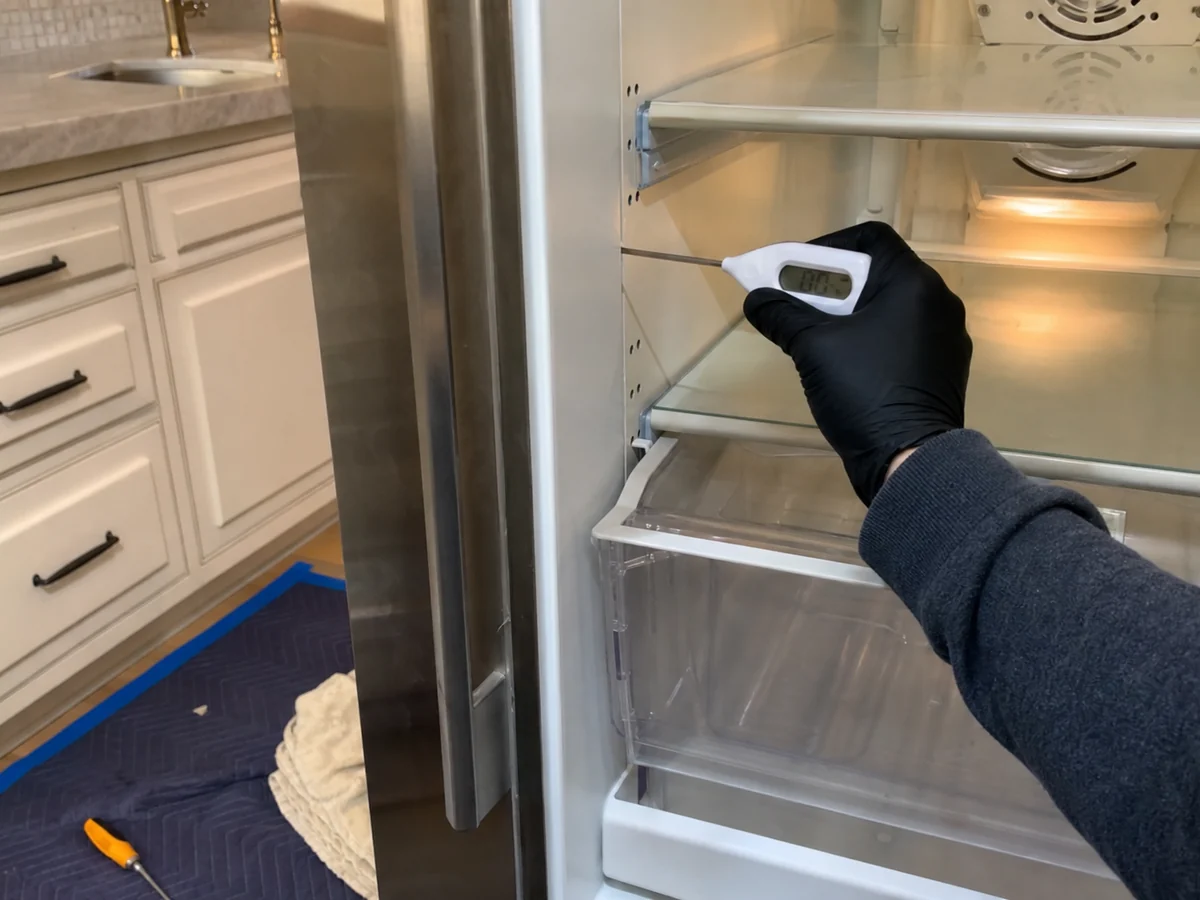
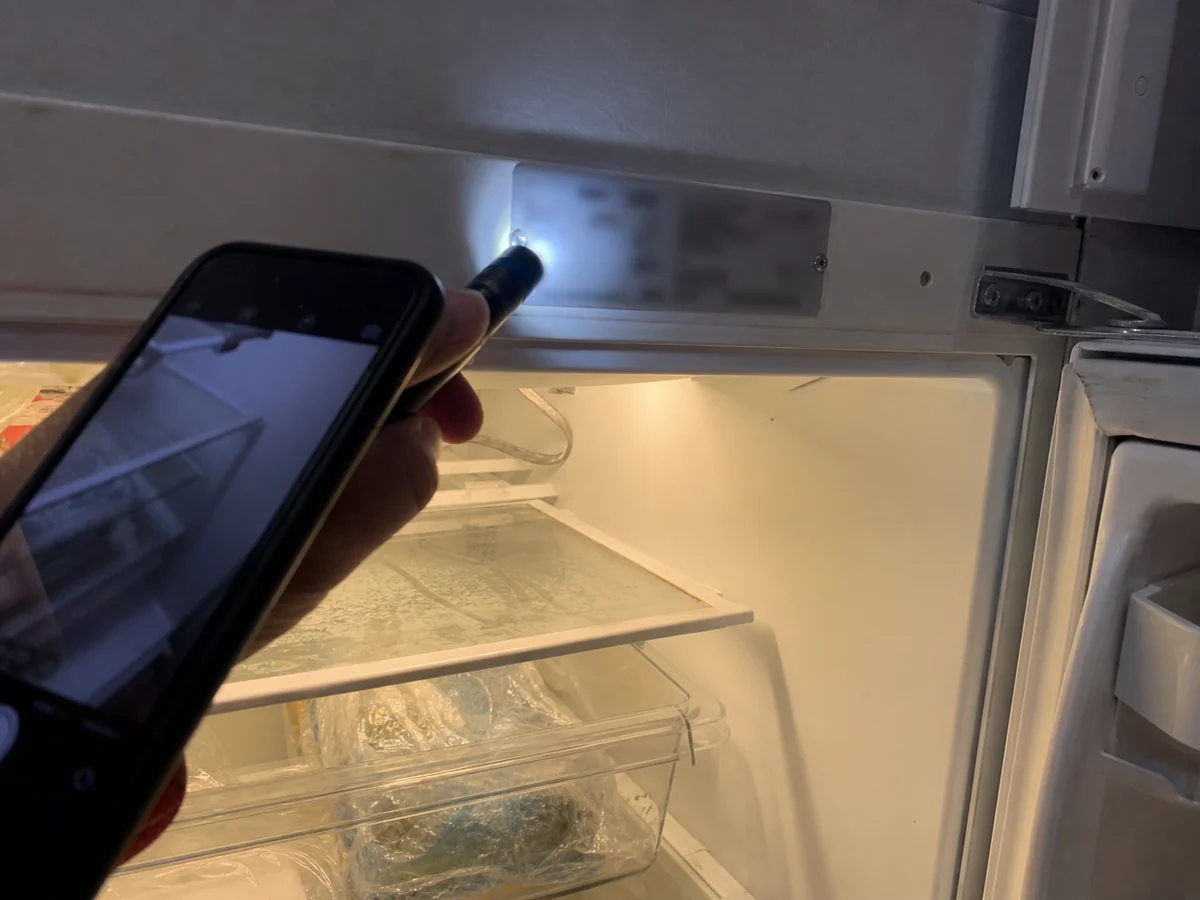
Condenser condition, probe readings and model verification are gathered before any compressor or refrigerant conclusion.


Model notes
Classic built-ins, Designer columns, PRO refrigeration, freezer columns and wine units do not share a single sealed-system story. Some symptoms are airflow or control related. Others require refrigerant-side tools and proper recovery or charging procedures. Exact values must be verified through service literature for the model and serial.
Local cabinet conditions matter. A Palomares Hills remodel with tight appliance panels can create airflow limits after a flooring or cabinet update. A Green Ridge legacy built-in may have years of dust at the condenser and older parts history. Those facts shape the first test, not the final conclusion. And because sealed-system verification on a built-in usually means pulling the unit forward, it leans on how we move a built-in Sub-Zero without damaging floors or panels before a single gauge goes on the circuit.
Cost table
Planning ranges for refrigerant-side work; a dirty condenser or weak fan is ruled out before any sealed-system quote.
| Service / symptom | What's included | Castro Valley price range | Typical time |
|---|---|---|---|
| Sealed-system diagnosis | Frost-pattern, pressure and electrical verification | $149–$290 | 1–2 hrs |
| Condenser fan (mimics sealed) | Serial-matched fan, airflow verification | $260–$560 | 1–3 hrs |
| Refrigerant leak repair | Locate, repair, recover and recharge (EPA-sensitive) | $690–$1,650 | 3–6 hrs + parts |
| Compressor replacement | Compressor, drier, recovery and charge | $1,200–$2,950 | 4–8 hrs + parts |
In hillside 94552 homes a dust-packed condenser can imitate compressor failure, so airflow and electrical evidence come first.
Quick facts
Self-contained Castro Valley facts with explicit prices, temperatures and intervals.
Before dispatch
Use the phone link or online booking page for a diagnostic visit before discussing sealed-system work.
Sealed system FAQ
Clear boundaries for high-cost repairs.
Yes. In 94552 hillside homes, oak dust can pack a condenser in 6–9 months, raising run time and cabinet temperature until a healthy sealed system looks like a failing compressor. A technician checks coil condition, fan operation and the temperature split before any sealed-system or compressor quote.
You usually cannot from temperature alone. A restricted condenser and a weak fan both raise temperatures, but only frost-pattern, pressure and electrical evidence confirms a sealed-system fault. That is why a Castro Valley sealed-system diagnosis ($149–$290) precedes any compressor quote ($1,200–$2,950).
No. Refrigerant work is regulated and unsafe without proper equipment and certification. The diagnosis should confirm whether sealed-system work is actually needed.
No. Fans, controls, thermistors, defrost, condenser restriction and door leaks can all create warm compartments.
It requires specialized tools, refrigerant handling, leak or restriction diagnosis and post-repair verification. It also carries more risk than replacing an accessible fan or gasket.
Long-term heat stress can contribute to wear, but the diagnosis should separate current symptoms from root cause and maintenance history.